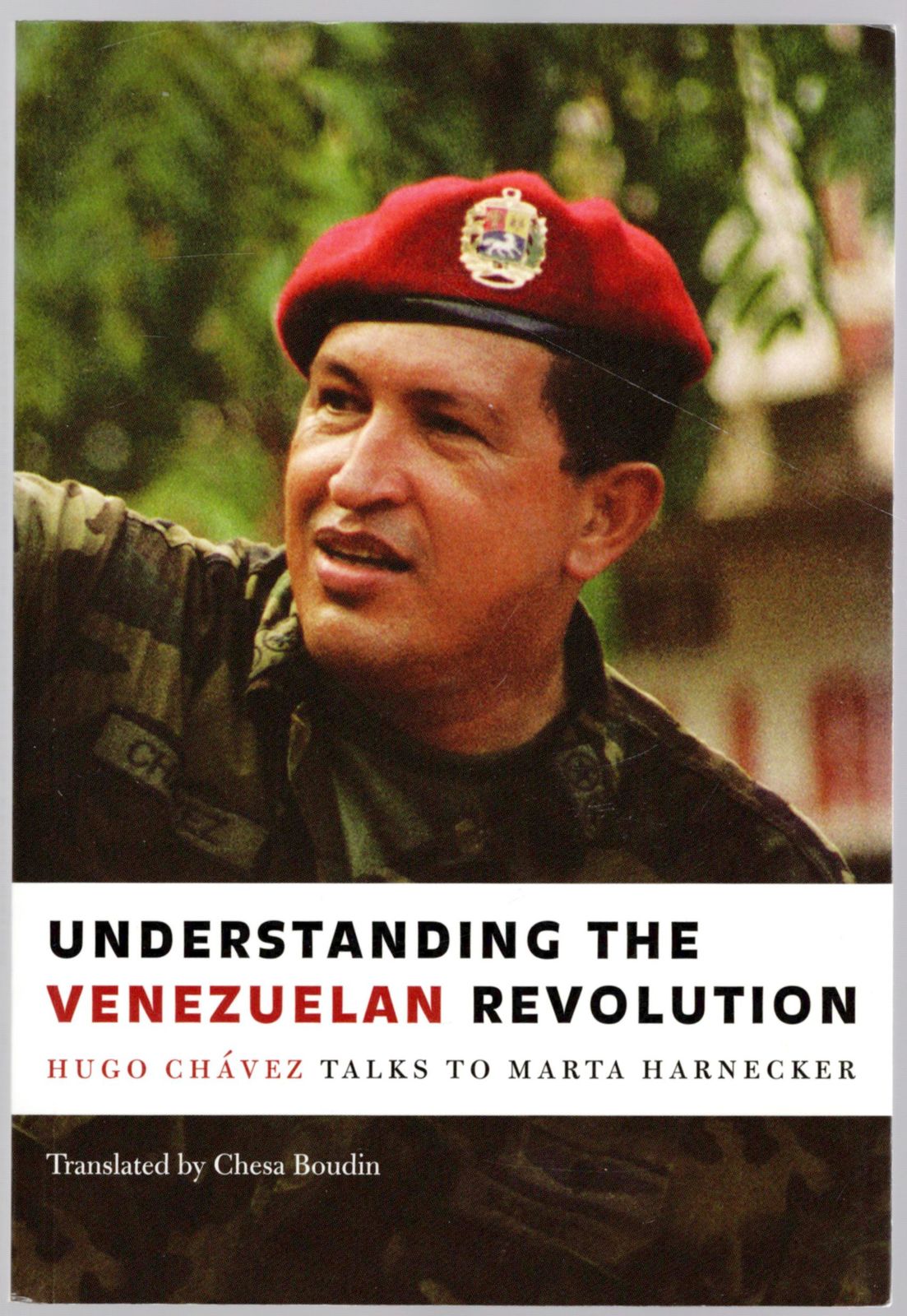
Understanding the Venezuelan Revolution: Hugo Chavez Talks to Marta Harnecker
$5.85
(It may be possible to pay only $5.21 instead of $5.85 when you
use your bCredits at checkout)
Sign up and get $15.00 bCredits free to use at checkout and another $5.00 bCredits when you make your first purchase.
More info
To learn more about bCredits, please click again on the icon or click here
Share & earn! Sign in, share this or any listing, and you’ll get commission when it sells.
Learn more
You can make your offer during the checkout process as long as you do not live in a state where marketplace facilitator tax laws exist. Check your state.
You can make your offer during the checkout process as long as you do not live in a state where marketplace facilitator tax laws exist. Check your state.
binding good. cover rub marks and scratches. minor edge and corner wear. no marks on text.
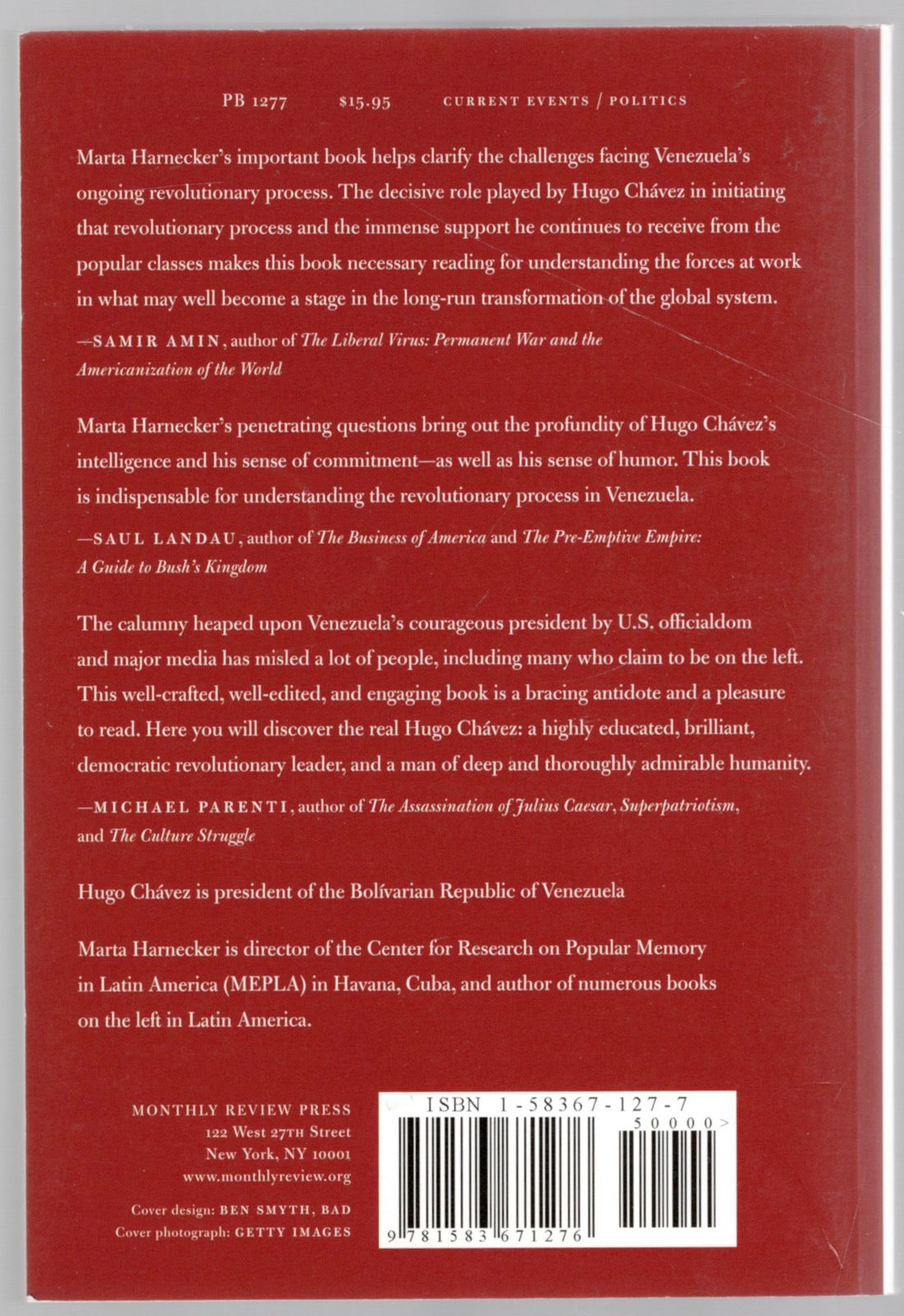
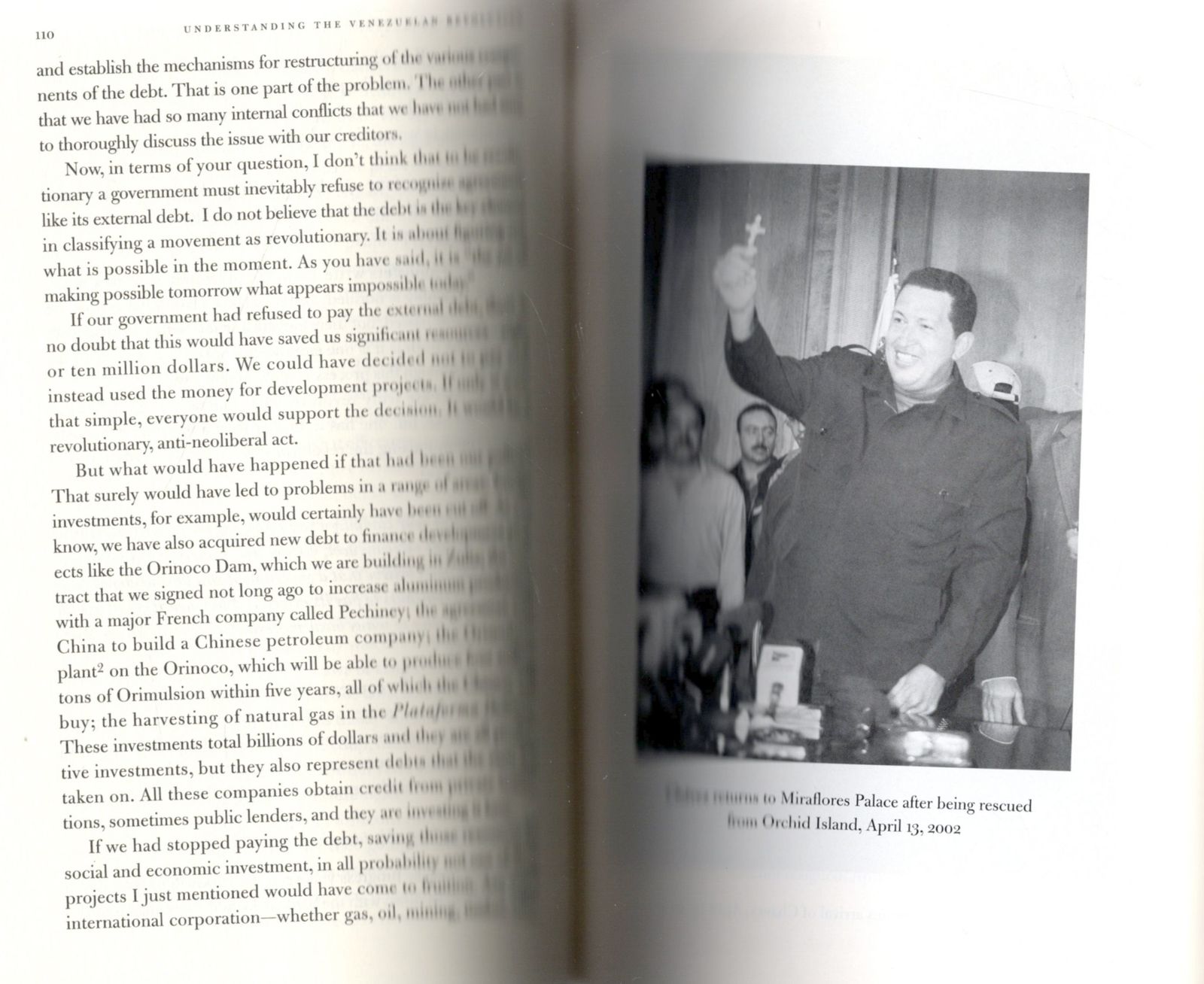
Marta Harnecker’s interviews with Hugo Chávez began soon after one of the most dramatic moments of Chávez’s presidency - the failed coup of April 2002, which ended with Chávez restored to power by a massive movement of protest and resistance. In the aftermath of the failed coup, Chávez talks to Harnecker about the formation of his political ideas, his aspirations for Venezuela, its domestic and international policies, problems of political organization, relations with social movements in other countries, and more, constantly relating these to concrete events and to strategies for change. The exchange between Harnecker and Chávez - sometimes reflective, sometimes anecdotal, always characterized by their passionate commitment to the struggles of the oppressed - brings to light the process of thought and action behind the public pronouncements and policies of state. The interviews are supplemented by extracts from Chávez’s most recent pronouncements on the ongoing transformation in Venezuela and Latin America, an analysis by Harnecker on the role of the military, and a chronology. Hugo Chávez has become a symbol of defiance of U.S. imperialism throughout Latin America. His importance for the future of the region makes this book essential reading.