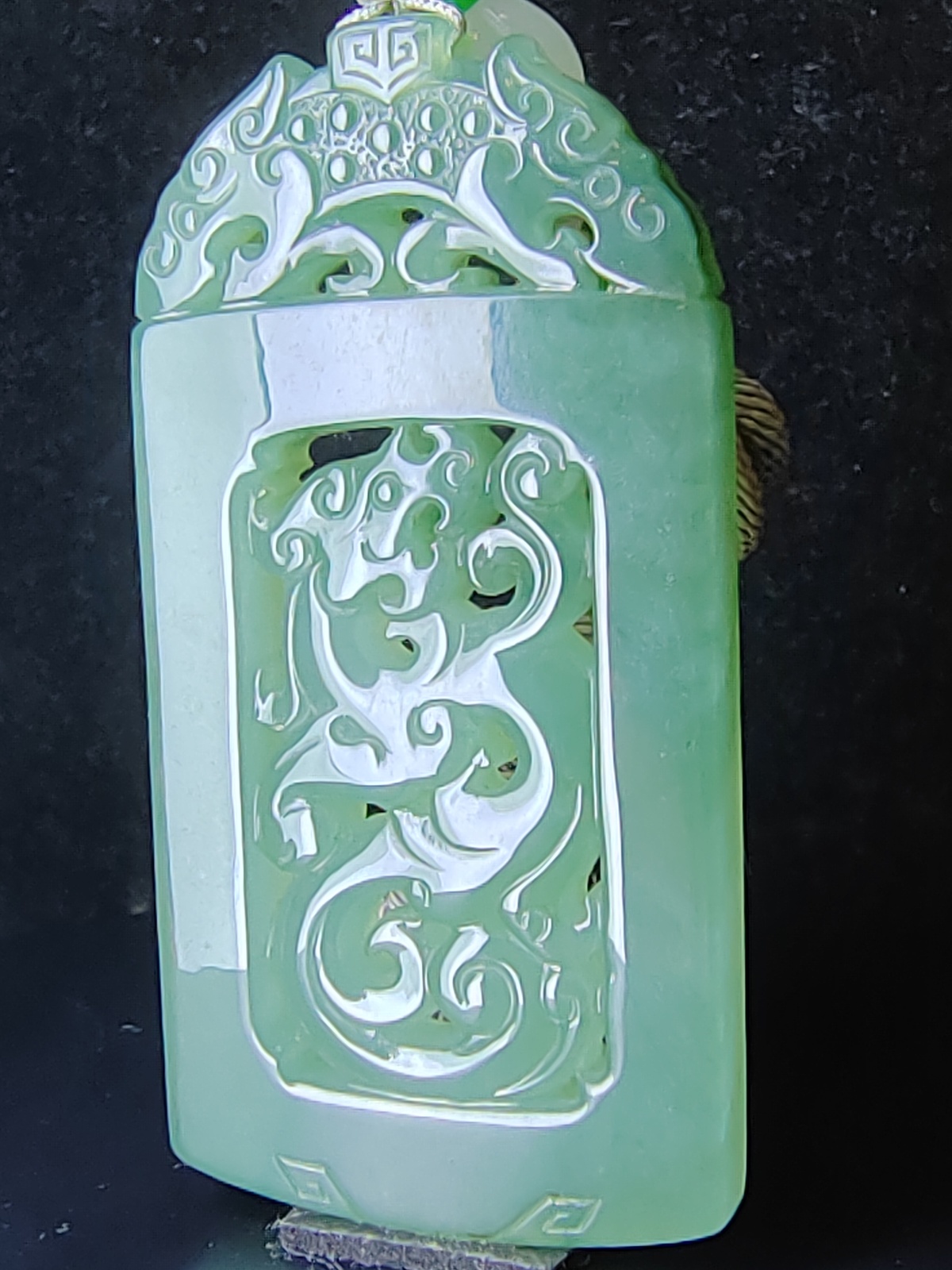
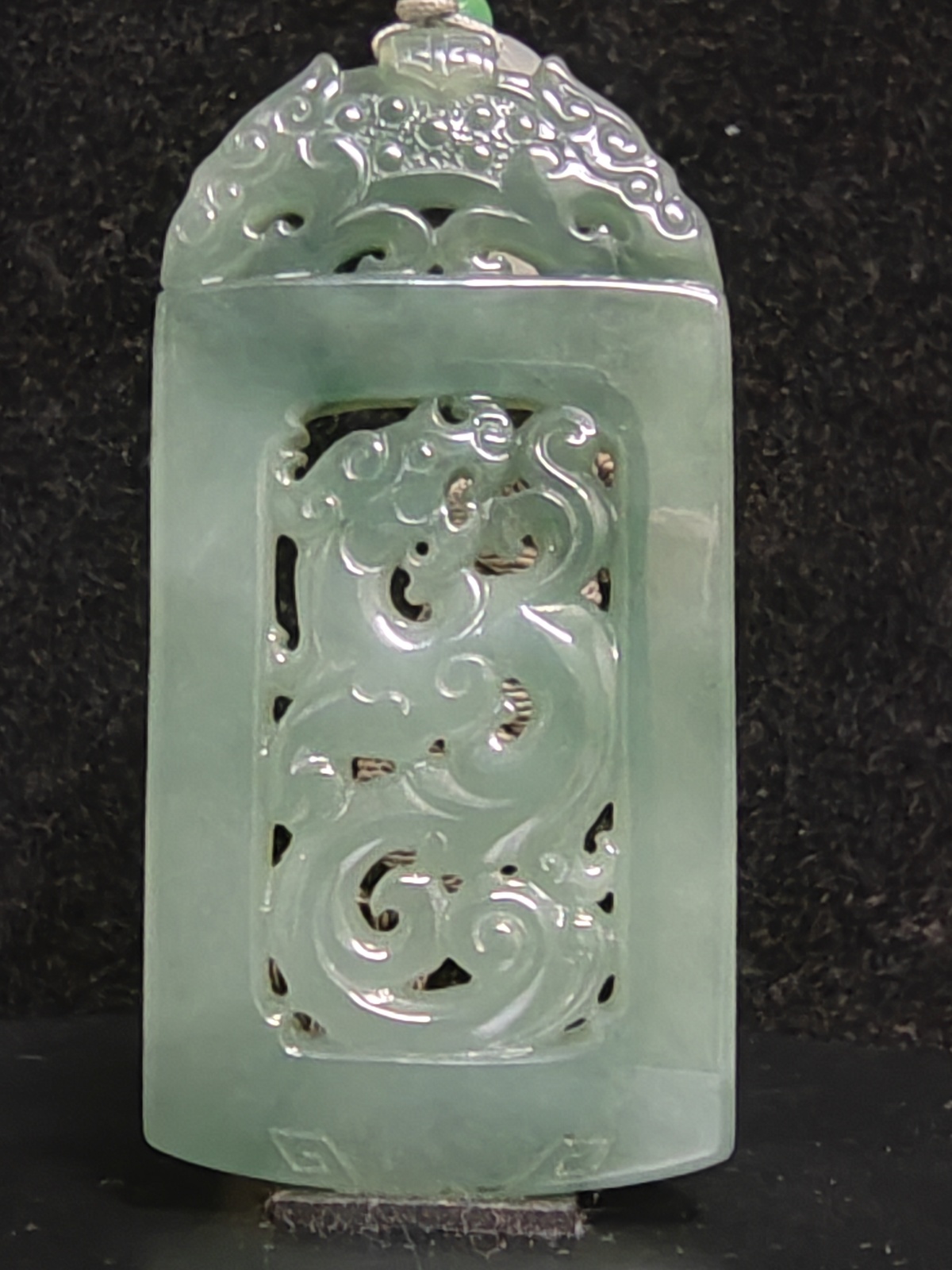
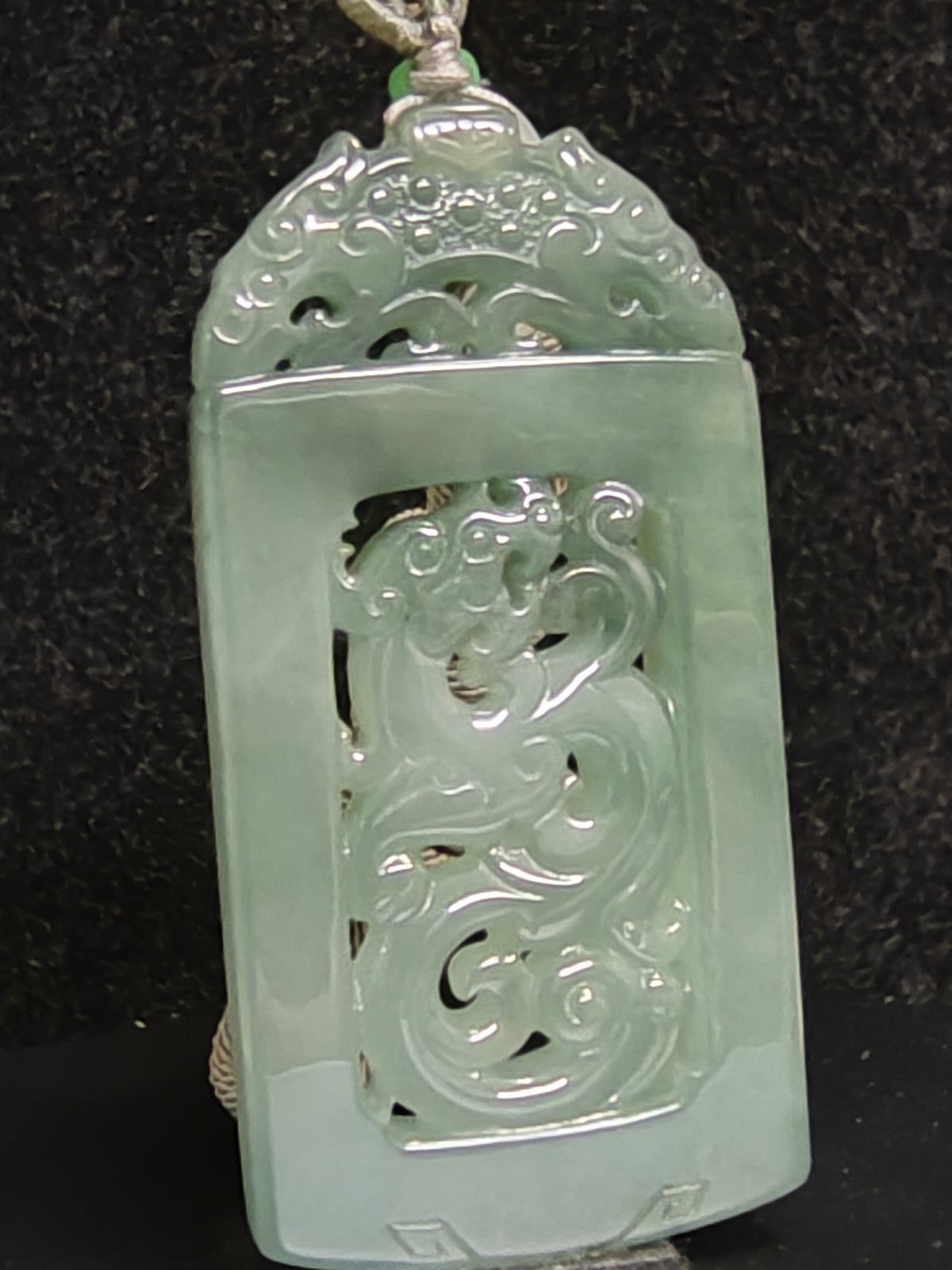
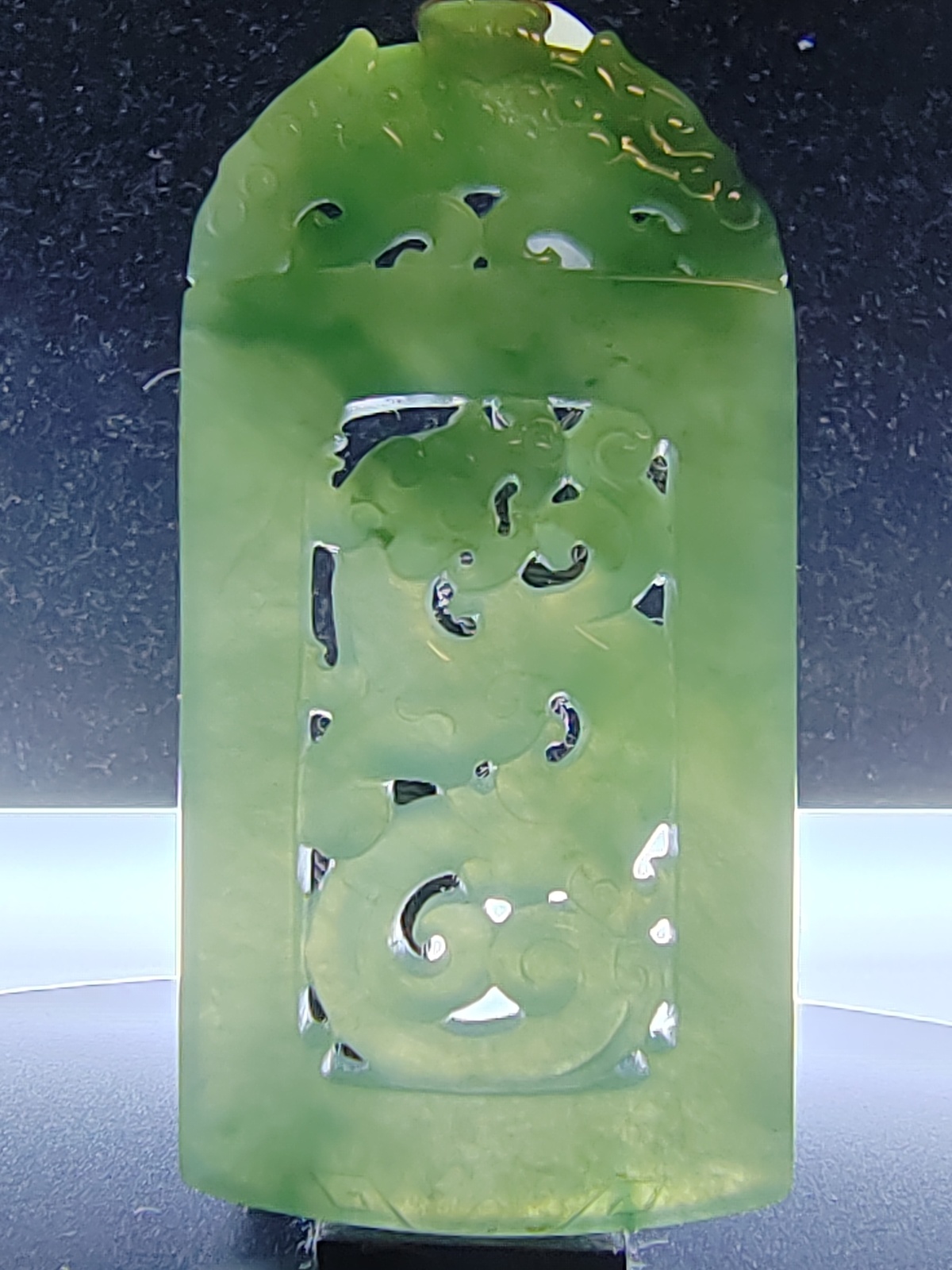
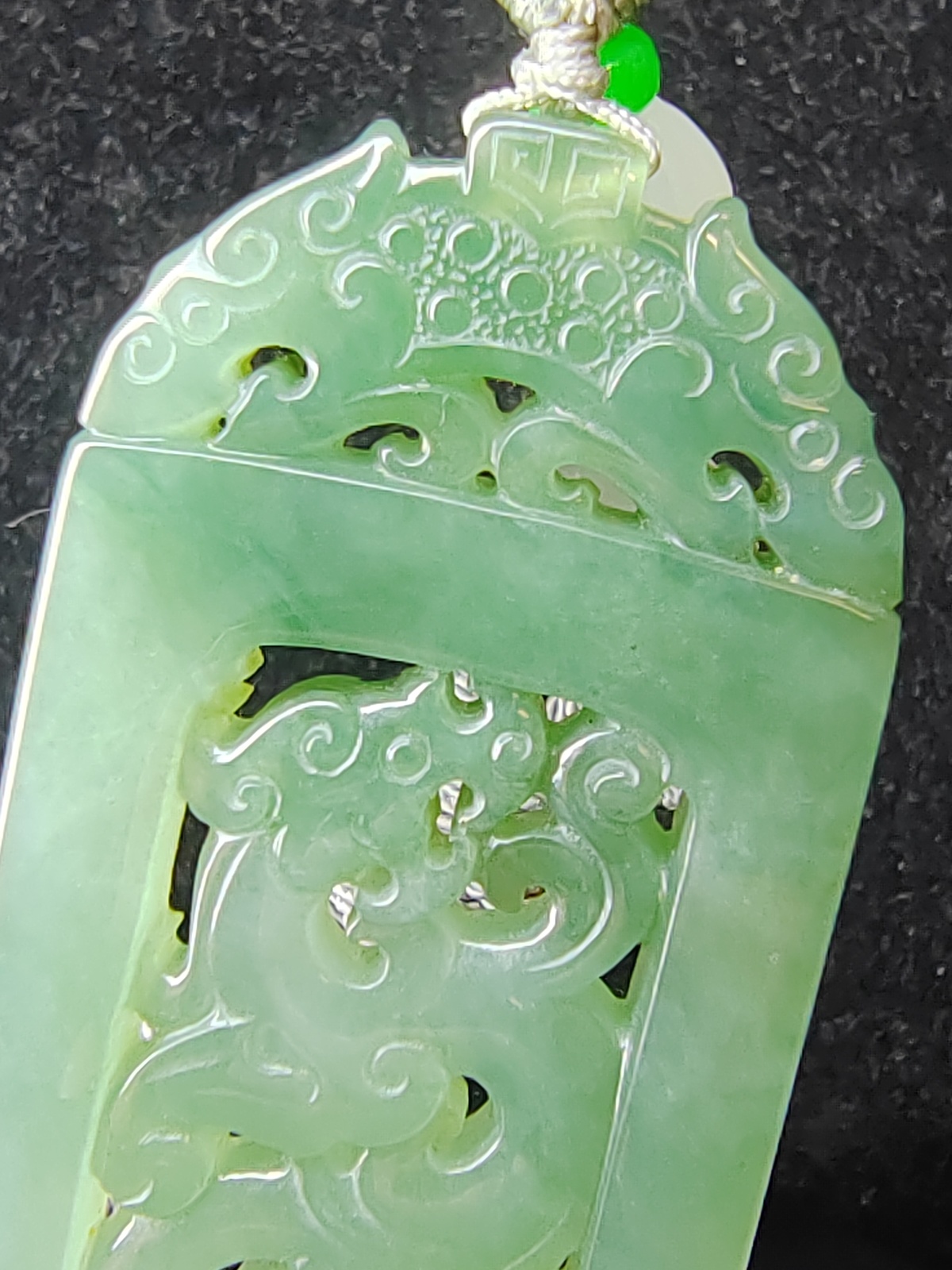
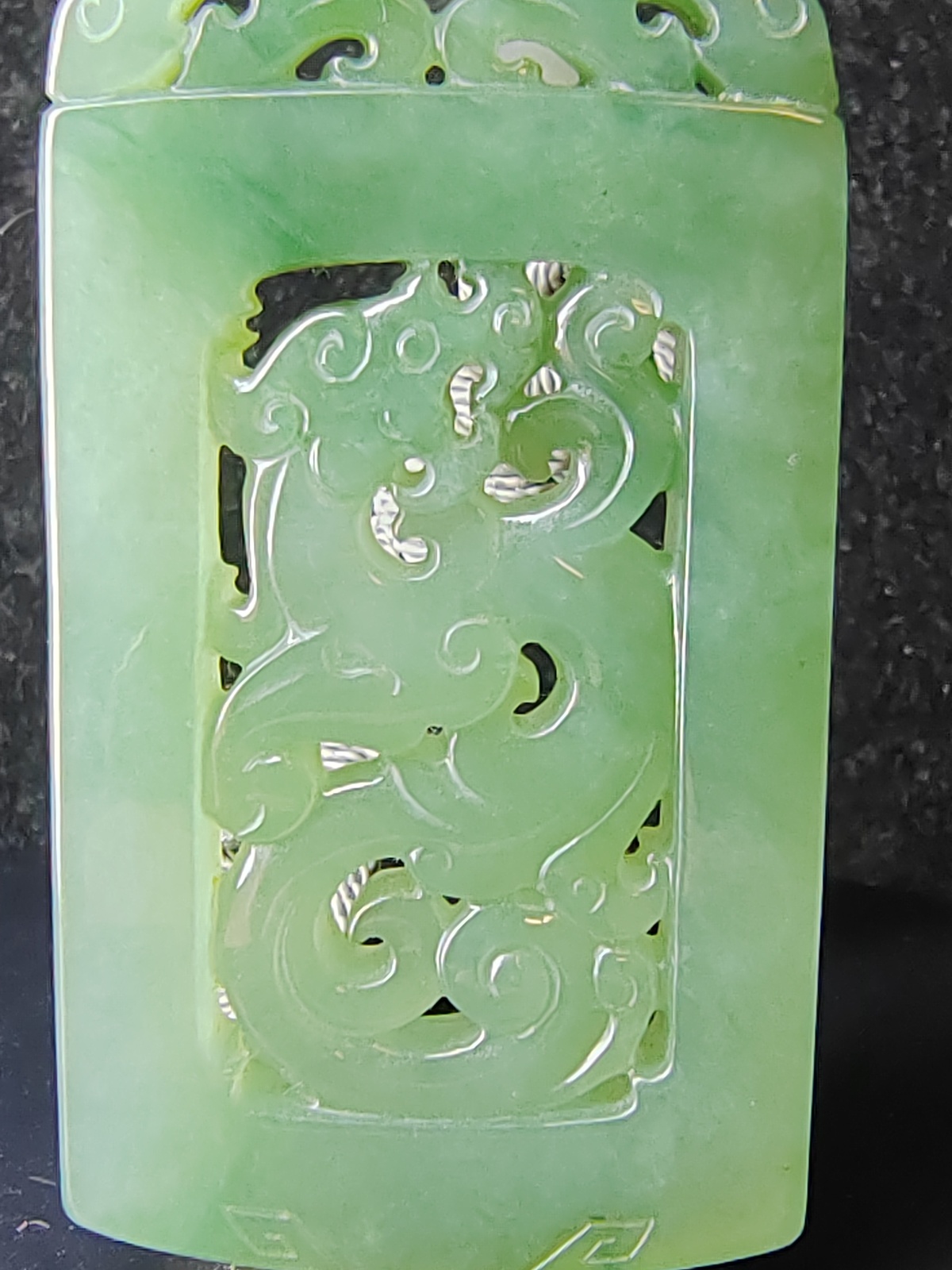
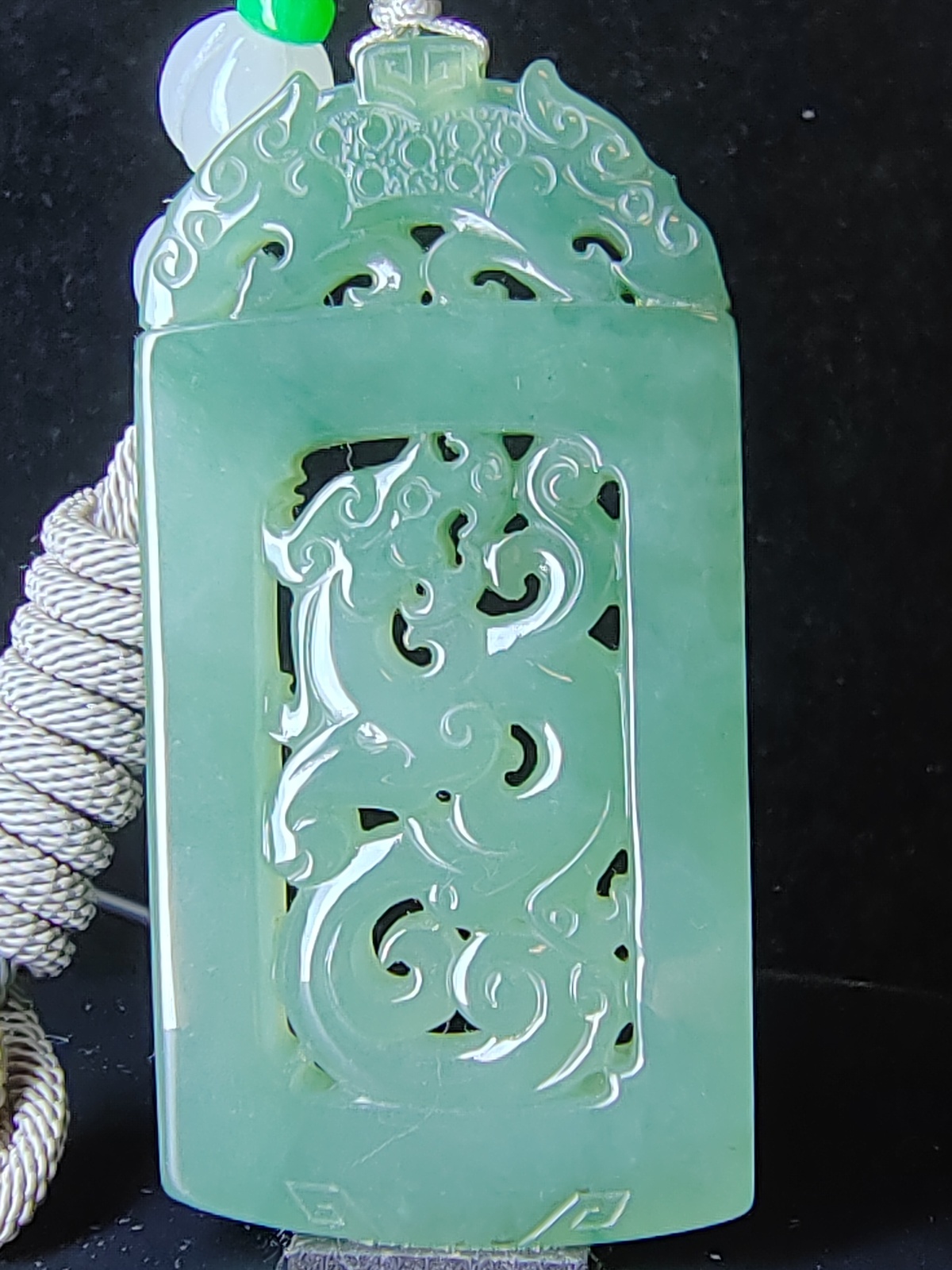
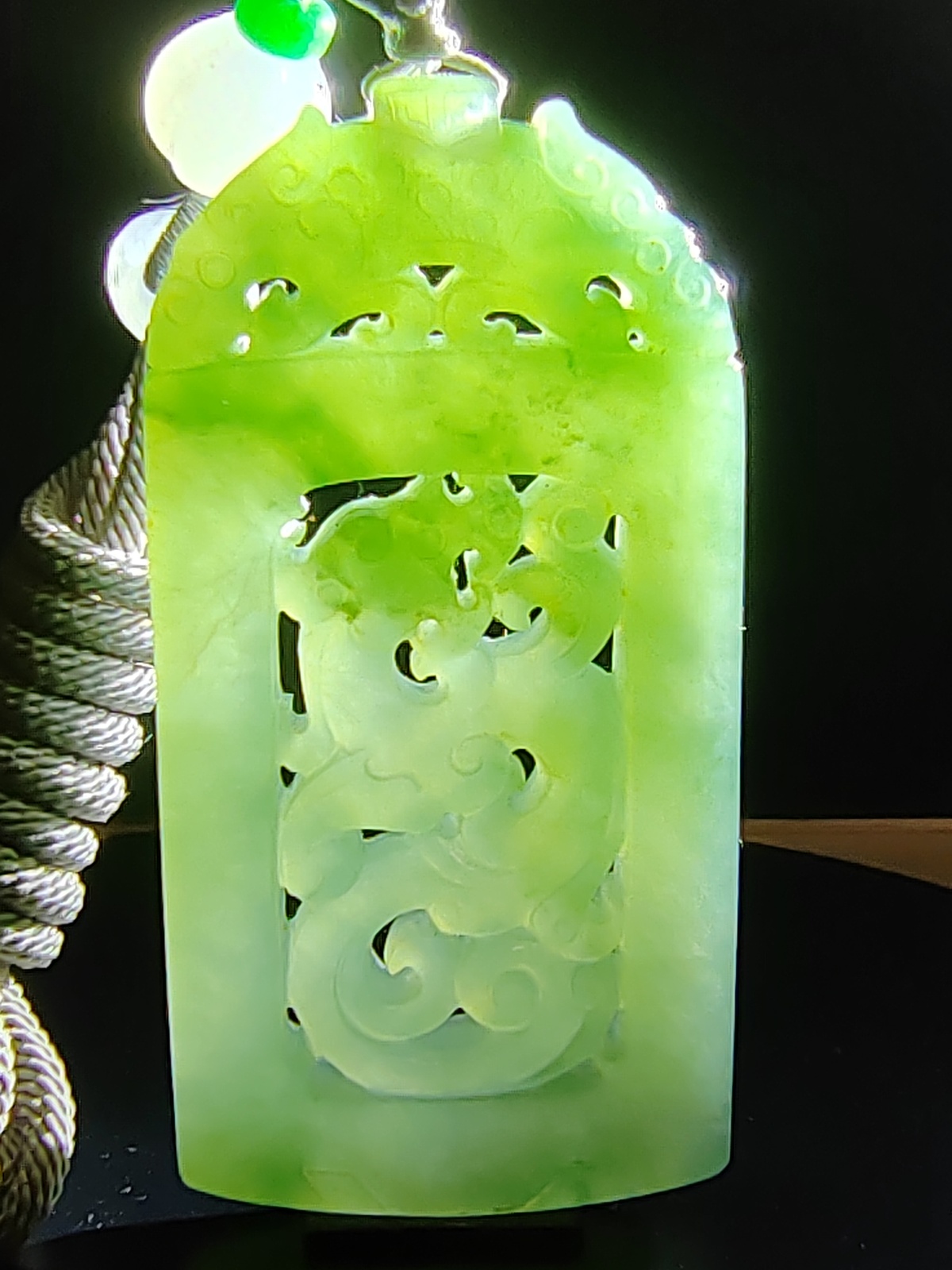
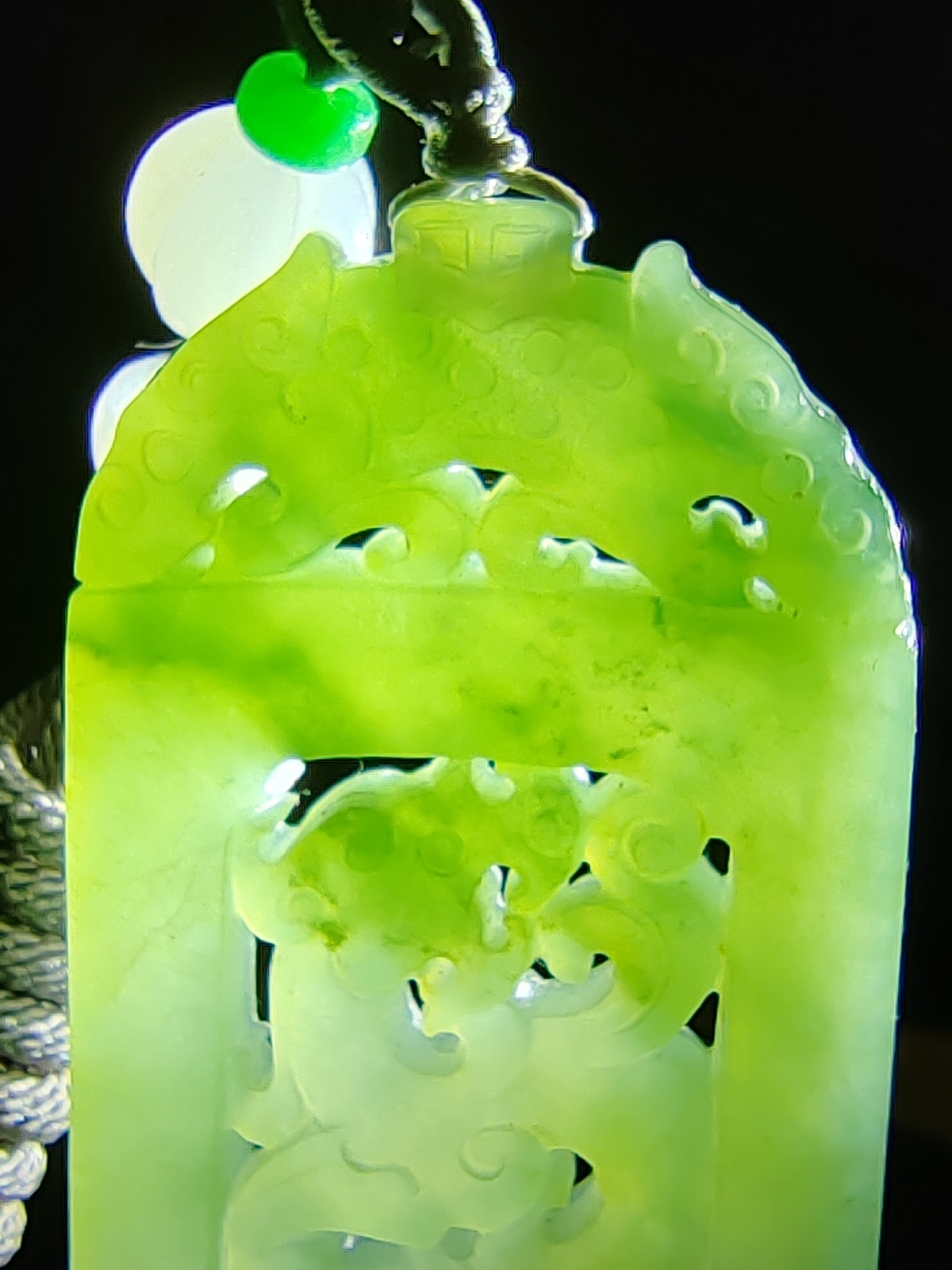
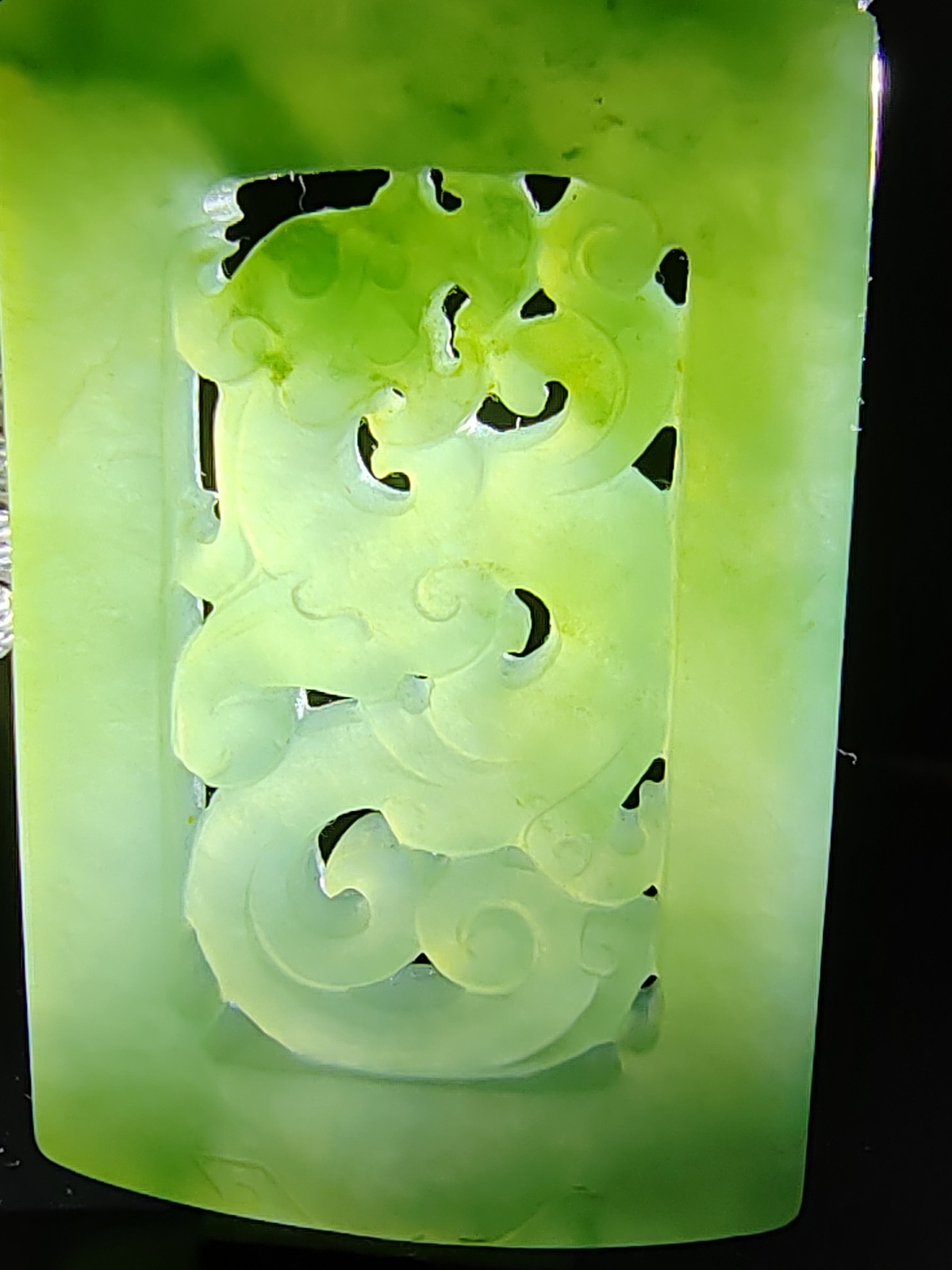
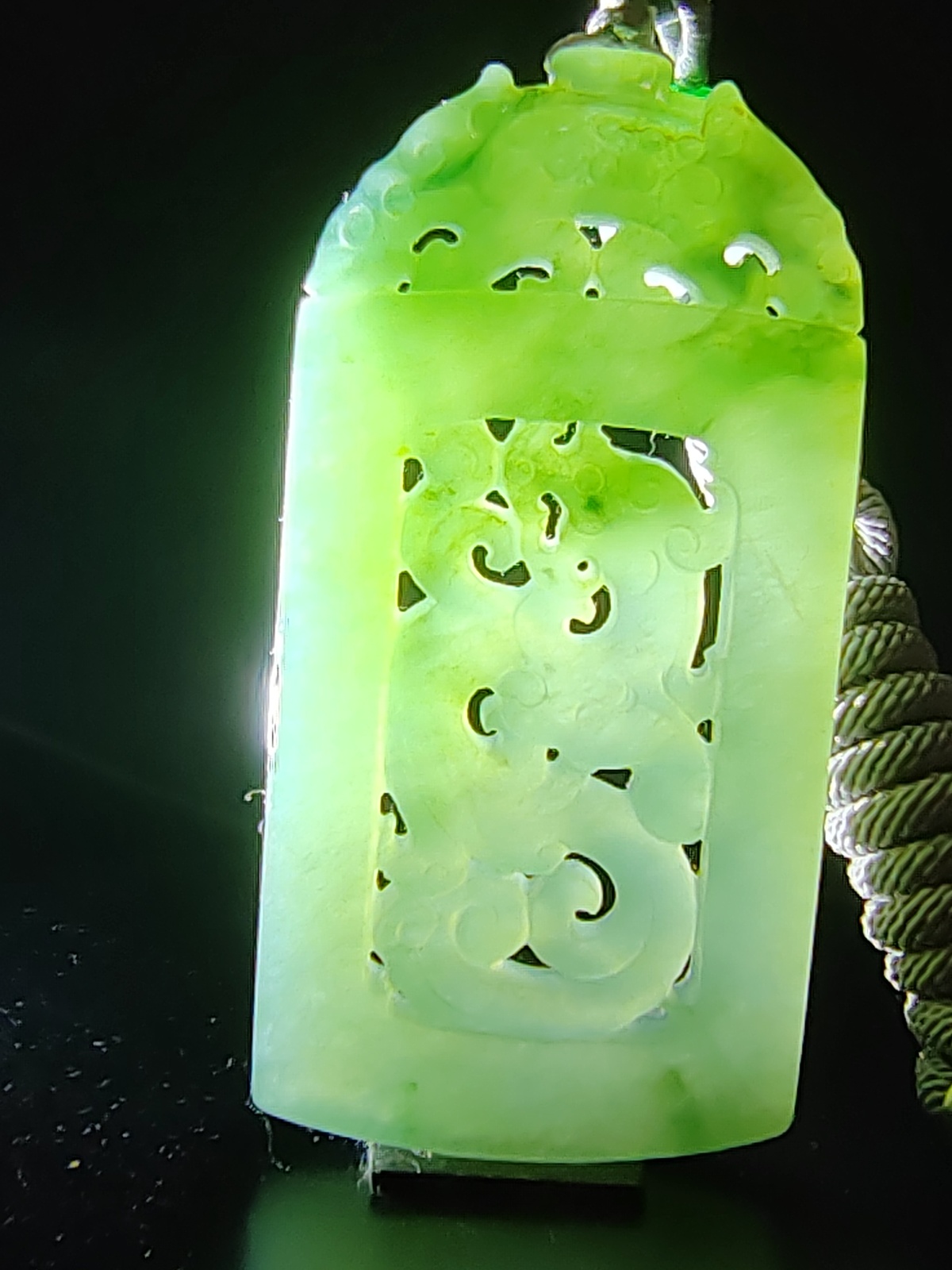
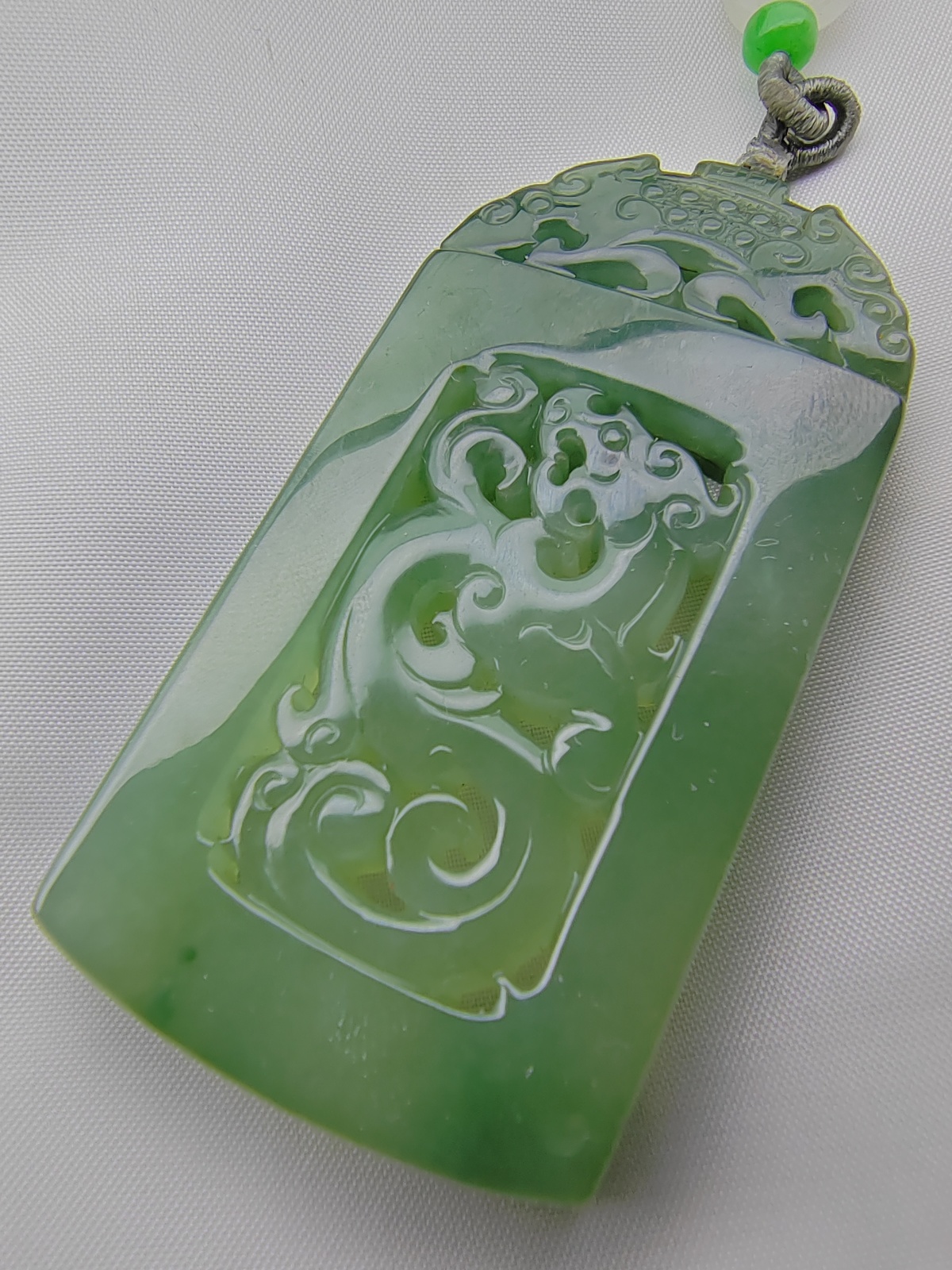
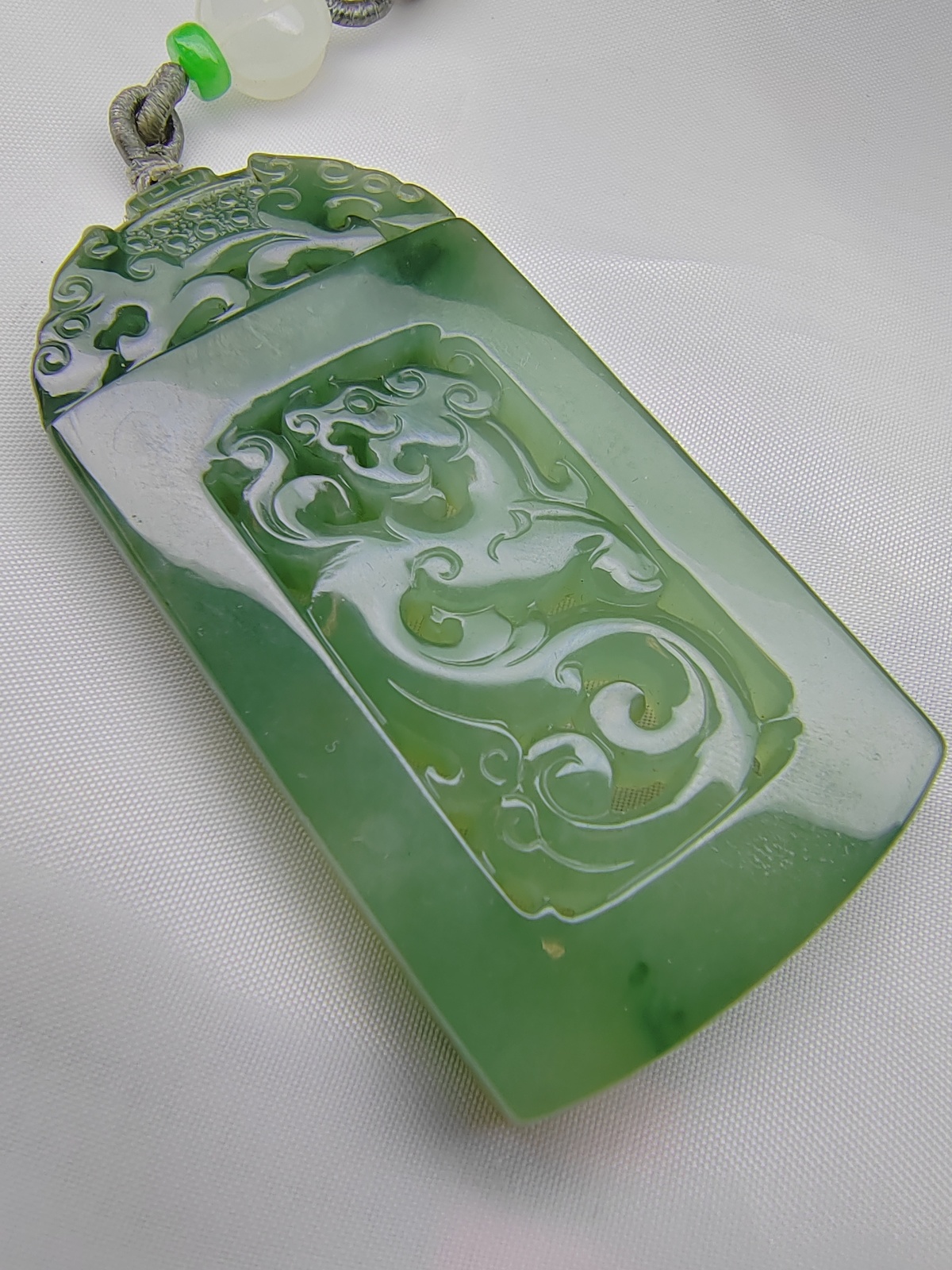
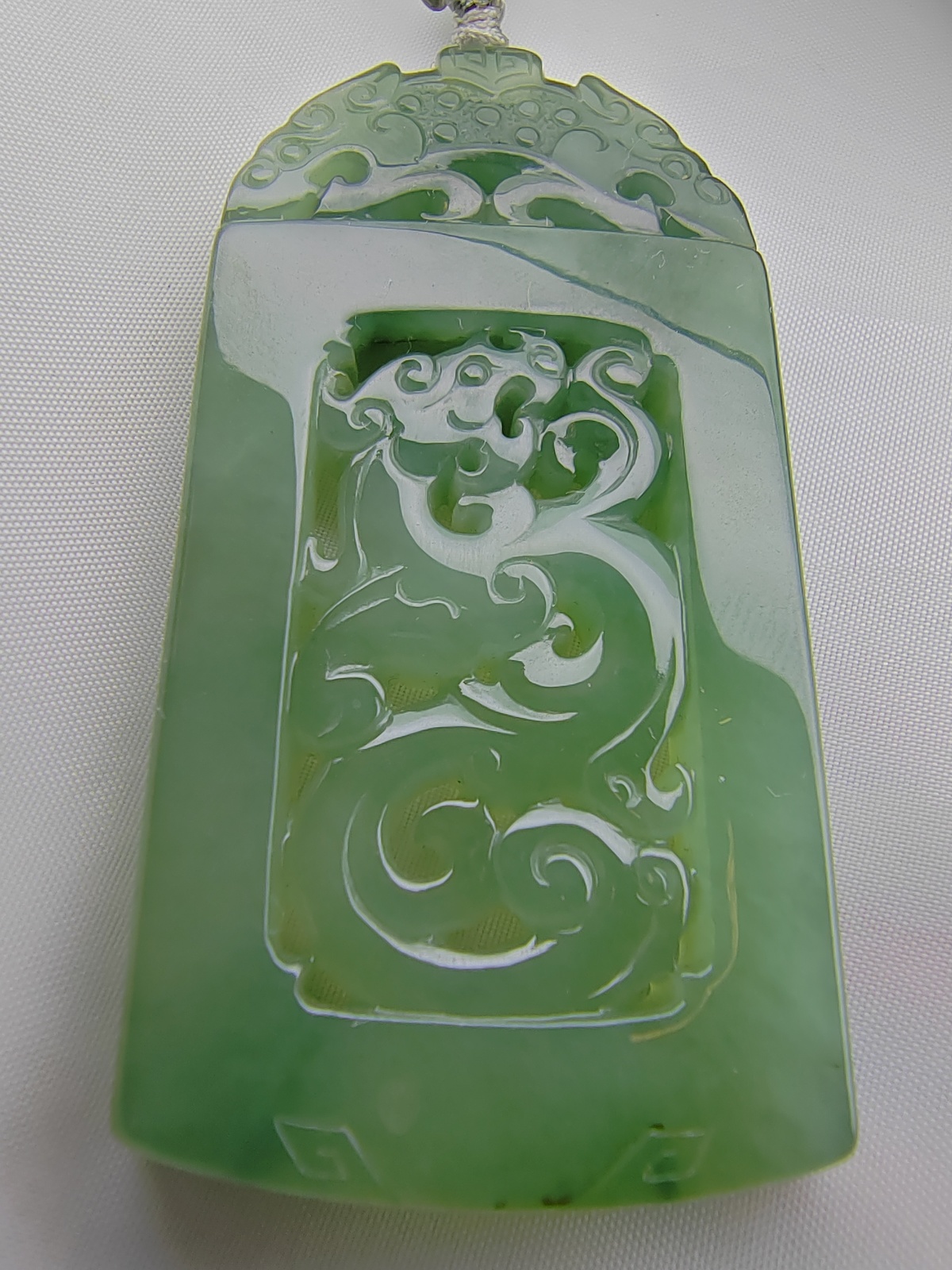
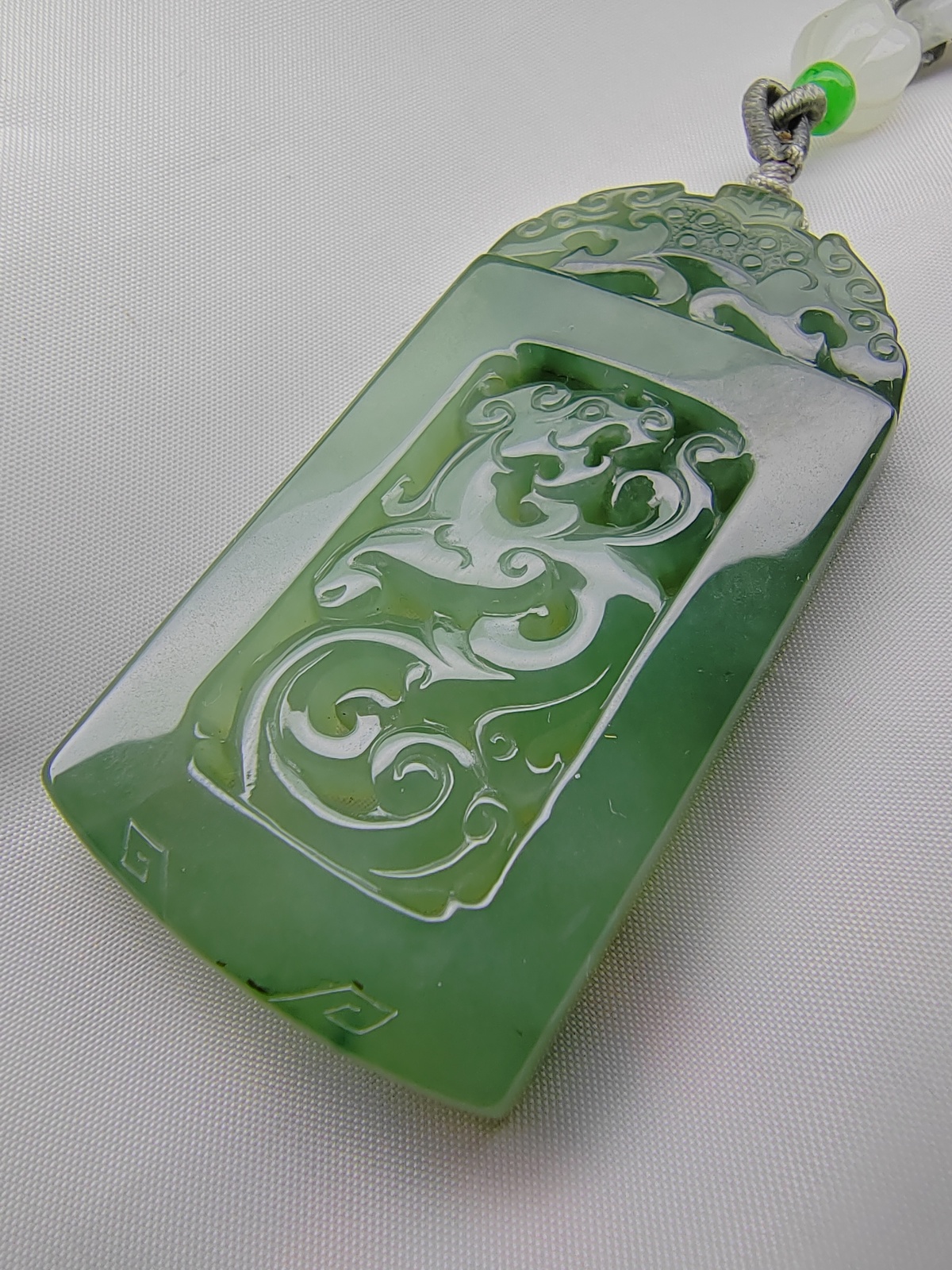
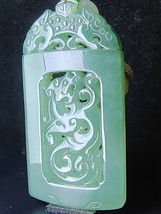
Natural Burma Jadeite Jade Dragon Pendant
Fine Hollow Hand Carving Ice Green 100% Natural Burma Jadeite Jade Dragon Pendant for Prosperity Longevity
With certificate (Authentic Type A Jadeite)
?????? ~ ????????????????????? / ????????????????
????A?????)
*Certificate No - R2020D103838
*Materials - 100% Natural Jadeite Jade
*Refractive Index - 1.66 (spot measurement)
*Jadeite Size - approx - 67.90mm/34.20mm/6.50mm
*Weight - 45.31 grams
*Carat - 226.55 carats
*Original - Burma
*Package - 1 X Pendant with String / 1 X Gift Box / 1 X Certificate
*Delivery - Worldwide Free Shipping
*Collections Video Display Link :- https://youtube.com/shorts/DTz6YiSoEzQ
Only One Unit Available
*Personal Collection Sale, Released for Appreciation.
*????, ?????
************************************************************************
This jadeite pendant is an extraordinarily precious piece of art, meticulously carved from ice light green jadeite. Through the exquisite technique of hollowed-out carving, the jadeite presents a delicate and translucent texture, depicting an auspicious dragon pattern. This masterpiece comes with a certificate verifying its quality and origin, confirming it as genuine Grade A natural jadeite. Measuring approximately 65.60mm 42.10mm 9.40mm and weighing about 40.95 grams, equivalent to 204.75 carats, this jadeite holds immense value in the world of collectibles due to its rarity and uniqueness. Beyond being a mere piece of jewelry, it embodies a cultural heritage and symbolism. The dragon motif carved on this pendant carries profound symbolism. In traditional Chinese culture, the dragon symbolizes auspiciousness and happiness, believed to bring good fortune and peace. Thus, wearing such a pendant not only adds adornment but also invokes a sense of auspiciousness and tranquility. The value of this piece lies not only in its rarity and exquisite craftsmanship but also in its unique cultural significance and artistic value. It serves not only as a beautiful jewelry item but also as a testimony to history and culture, suitable for private collections.
The Rarity and Collectible Value of Natural Jadeite
Jadeite, often referred to as "imperial jade" due to its historical association with royalty, is a gemstone of unparalleled rarity and enduring collectible value. Its captivating allure lies not only in its exquisite beauty but also in its remarkable geological formation, making it a treasure sought by collectors and connoisseurs worldwide.
1. Geological Rarity: Natural jadeite is exceptionally rare, originating from remote deposits in Myanmar (Burma), where geological conditions of high pressure and low temperature over millions of years have given birth to this magnificent gemstone. It is estimated that less than 1% of jadeite mined globally meets the stringent quality standards for fine jewelry and investment-grade pieces.
2. Vivid Color Palette: Jadeite is celebrated for its diverse and vibrant range of colors, from the iconic imperial green to mesmerizing lavender, radiant white, and fiery reds. The vividness of these hues is unparalleled, and collectors are often drawn to the challenge of acquiring specific colors and shades.
3. Transparency and Texture: The transparency and texture of jadeite are equally important factors contributing to its desirability. Fine jadeite possesses a crystalline clarity that allows light to penetrate and illuminate the gem from within, creating a luminous, almost ethereal quality.
4. Cultural Significance: Throughout history, jadeite has held immense cultural significance in various civilizations, including China, where it symbolizes virtue, integrity, and longevity. This cultural reverence adds an additional layer of allure to jadeite, making it a cherished symbol of heritage and tradition.
5. Investment Potential: Beyond its intrinsic beauty, jadeite is increasingly recognized as a solid investment option. Its scarcity, combined with growing global demand, has resulted in significant appreciation in value over the years. Savvy collectors and investors view jadeite as a tangible asset with the potential for long-term capital appreciation.
6. Expertise and Certification: Due to the nuanced nature of jadeite, it is essential to rely on reputable gemological expertise and certification when acquiring pieces. Certificates from recognized gemological laboratories authenticate the quality, origin, and natural properties of the gem, instilling confidence in both collectors and investors.
7. Heirloom Quality: Jadeite is often considered an heirloom, passed down through generations as a symbol of family heritage and prosperity. Its durability and timeless appeal ensure that it remains cherished for centuries.
In conclusion, the rarity and collectible value of natural jadeite extend far beyond its aesthetic appeal. Its geological formation, captivating colors, and cultural significance make it a gemstone that transcends time and borders. For collectors and investors alike, jadeite represents not only a beautiful adornment but also a tangible piece of history and an enduring store of value.
Green jadeite is a rare gemstone that gets its color from the presence of chrome element. Due to its green color, it is considered a symbol of calmness and peace. It is also seen as a talisman that can help people get rid of troubles and annoyances. In addition, jadeite is believed to have healing properties and can help people recover their health. In Eastern culture, jadeite is considered a symbol of wealth and luck. It is believed to bring wealth and business success, therefore many people treat it as an investment piece or place it in positions that symbolize wealth, such as on an office desk. In addition, jadeite is a very popular gift because it not only has a beautiful appearance but also carries a positive meaning. Therefore, green jadeite is often given as gifts to loved ones, friends and family members.
The Kui dragon is a mythical creature in Chinese culture, often depicted as a combination of animal features such as a deer's body, dragon's head, fish scales, eagle claws, and antlers. According to legend, the Kui dragon appeared in the ancient Chinese book "Shan Hai Jing" and was ridden by the god Fuxi. It represents good fortune, drives away evil spirits, and symbolizes auspiciousness and blessing. In ancient China, the image of Kui dragon was commonly used in decorative arts, such as jade, bronze, porcelain, and architecture. Its appearance on these objects not only serves as an embellishment but also carries sacred meanings, as people believed it could invoke the protection and blessings of the gods. For instance, Kui dragon patterns were commonly seen on jade pendants and jewelry during the Ming and Qing dynasties, representing auspiciousness, good fortune, and safety. Apart from decorative arts, the Kui dragon also features in traditional Chinese music. The piece "Kui Long Yin" in the Guqin repertoire imitates the call and form of the Kui dragon, evoking the mystery and majesty of the mythical creature. In summary, the Kui dragon is a significant totemic figure in Chinese traditional culture, representing auspiciousness, mystery, and majesty. It plays an important role in the inheritance of Chinese art, decorative arts, music, and other aspects of cultural heritage.
?????????????
??, ????“????”, ????????????????, ???????????????????????????????????????????, ?????????????, ????????????????????
1. ?????: ????????, ??????????) ?????????????????????????, ????????????????, ????????, ???1%???????????????????
2. ???????: ?????????????????????, ???????????????????????????????????????????, ????????????????????
3. ??????: ???????????????????????????????????, ??????????????, ??????????????
4. ????: ?????????????????, ?????????, ?????, ????????????????????????????, ???????????????
5. ????: ????????, ???????????????????????????????????, ??????????????????????????????????????????
6. ???????: ?????????, ?????????????????????????????????????????????????????????, ?????????????
7. ????: ?????????????, ????, ????????????????????????????????
??, ????????????????????????????????????????????????????????????????????, ?????????????, ??????????????????????????
????
??????????????, ????????????, ??????, ?????????, ??????????????????????????????, ?????????????????????????, ????, ?????????????????, ??????????
1?????????, ???????????????????????, ???????????
2???????, ????, ????, ??????????????????????????
3????????????, ?????????, ????????????
4????????, ??????????“?”??, ??????????????
5??????????, , ?????????????????
?????????????????, ??????????????????????????????????????????????, ????????????, ??????????????????????, ?????????????????, ???????????????????????????, ??????????, ?????????, ????????????????, ?????????????????, ?????????????, ?????????????????????????????????, ??????????????????????????“???”???, ????????????, ?????????????????, ?????????????????????, ?????????????????????????????????????????, ??????????????
????????????, ??????????????????????????, ???????????????????????????, ????????????????, ????????????, ?????????????????, ?????????????????????????????????, ??????????????, ?????????????, ????????, ??????????????, ????????????, ?????????????, ???????????????????
?????????????????, ????????????????????????????, ?????????????????, ??????????????????????, ??????????, ??????A???????????65.60mm 42.10mm 9.40mm, ??40.95?, ???204.75????????????????, ??????????????????????????????????, ?????????????????????????, ????????????????????, ??????????????????, ????????????????, ???????????????????????????????????, ??????????????????????????????, ?????????????????, ???????????, ????????????????????, ???????????????????, ???????????????????????????????, ????????????????









 Ice Green 100% Natural Burma Jadeite Jade Dragon Pendant # 226.55 carat # added to cart.
Only one available in stock
Ice Green 100% Natural Burma Jadeite Jade Dragon Pendant # 226.55 carat # added to cart.
Only one available in stock
 Please wait while we finish adding this item to your cart.


